
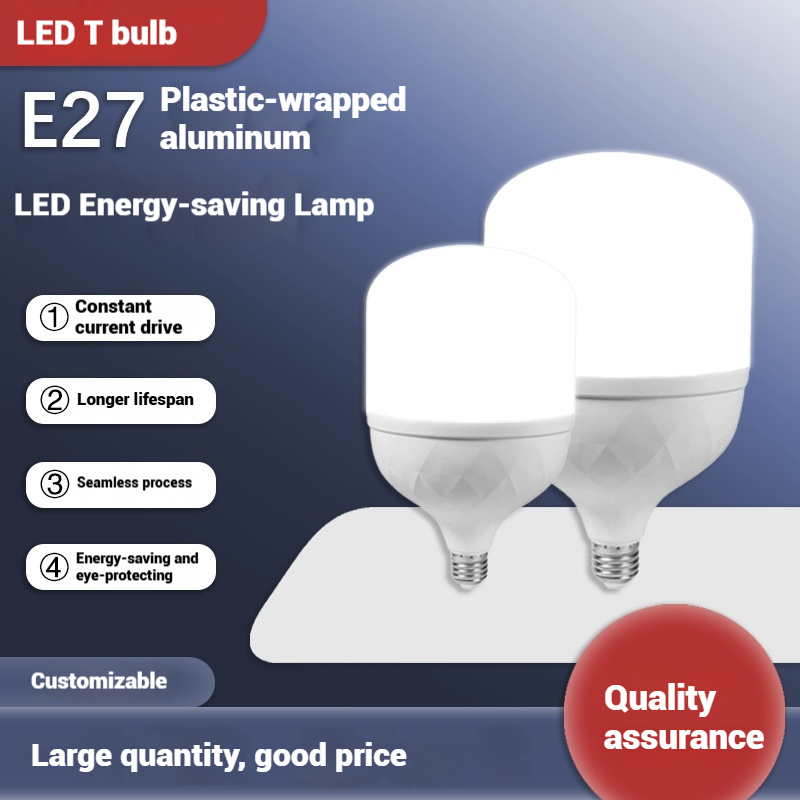
Choosing the right T bulb wattage can make a big difference in brightness, energy efficiency, and overall comfort. Whether you’re lighting a home, office, or commercial space, understanding how 5W, 10W, 20W, 30W, 40W, and 50W T bulbs perform will help you make the best decision.
What Is a T Bulb?
A T bulb (Tubular bulb) features a slim, elongated shape, making it ideal for fixtures where space is limited or directional lighting is needed. These bulbs are commonly used in:
- Ceiling fixtures
- Pendant lights
- Display lighting
- Industrial and commercial environments
Modern LED T bulbs are especially popular due to their long lifespan and low energy consumption.
Understanding Wattage vs Brightness
Wattage (W) indicates power consumption, not brightness. With LED technology, lower wattage can still produce high lumens (brightness). Here’s a general guide:
- 5W ≈ 400–500 lumens
- 10W ≈ 800–1000 lumens
- 20W ≈ 1600–2000 lumens
- 30W ≈ 2400–3000 lumens
- 40W ≈ 3200–4000 lumens
- 50W ≈ 4500–5500 lumens
Choosing the Right T Bulb Wattage
5W T Bulb – Soft Accent Lighting
Best for decorative or ambient lighting. Ideal for:
- Bedrooms
- Hallways
- Small lamps
If you want a cozy atmosphere rather than strong illumination, 5W is a great choice.
10W T Bulb – General Home Use
Perfect for:
- Living rooms
- Small offices
- Kitchens (supplementary lighting)
It provides a comfortable brightness without being too harsh.
20W T Bulb – Bright Task Lighting
Suitable for:
- Workspaces
- Reading areas
- Retail displays
This wattage strikes a balance between efficiency and brightness.
30W T Bulb – Commercial & Large Rooms
Best used in:
- Offices
- Classrooms
- Medium-sized retail stores
It delivers strong, consistent illumination for productivity.
40W T Bulb – High-Output Lighting
Ideal for:
- Warehouses
- Garages
- Large indoor areas
This is where you need powerful lighting to cover wide spaces.
50W T Bulb – Industrial Power Lighting
Designed for:
- Factories
- Outdoor areas
- High ceilings
If maximum brightness is required, 50W is the top choice.
Key Factors to Consider
1. Room Size
Larger spaces need higher wattage for proper illumination.
2. Ceiling Height
Higher ceilings require more powerful bulbs like 40W or 50W.
3. Lighting Purpose
- Ambient → 5W–10W
- Task → 20W–30W
- Industrial → 40W–50W
4. Energy Efficiency
LED T bulbs consume less energy while delivering higher brightness, making them a cost-effective solution.
Why Choose LED T Bulbs?
- Energy-saving (up to 80% less power consumption)
- Long lifespan (up to 30,000 hours)
- Low heat emission
- Eco-friendly
Conclusion
There is no “one-size-fits-all” T bulb. The right choice depends on your space, lighting purpose, and brightness requirements:
- Small, cozy spaces → 5W–10W
- Everyday lighting → 20W–30W
- Large or commercial areas → 40W–50W
By selecting the appropriate wattage, you can achieve optimal lighting performance while saving energy and reducing costs.
FAQs
Q1: Is higher wattage always better?
No. Higher wattage means more brightness, but it may be unnecessary and waste energy in small spaces.
Q2: Can I replace traditional bulbs with LED T bulbs?
Yes, as long as the base and voltage are compatible.
Q3: How long do LED T bulbs last?
Typically between 25,000 to 50,000 hours, depending on quality.
Q4: Which T bulb is best for home use?
Most households prefer 10W to 20W for general lighting.
