
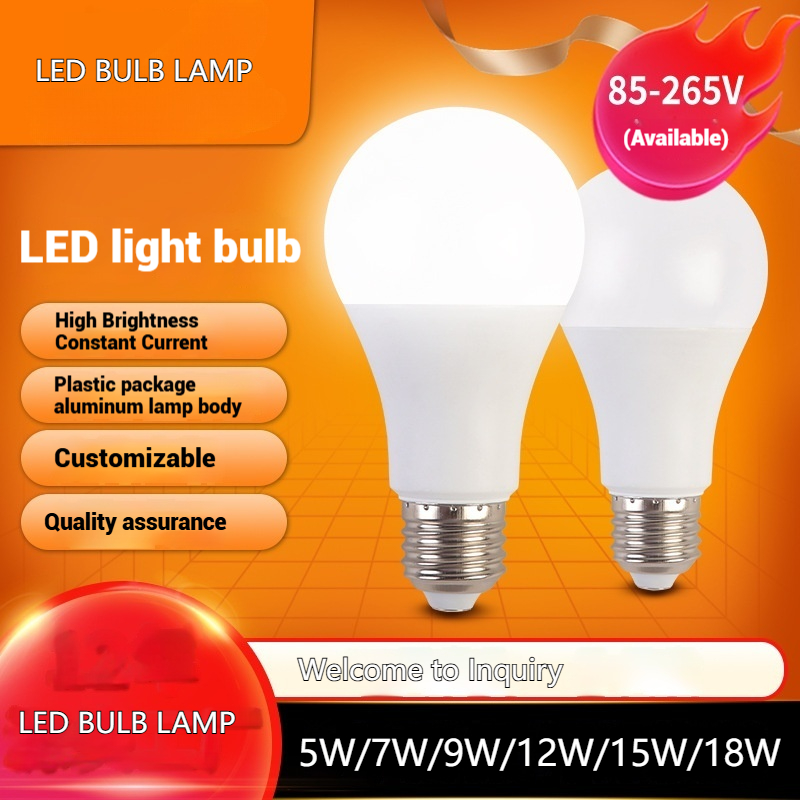
In today’s lighting industry, LED bulbs have become the dominant choice for energy-efficient illumination in residential, commercial, and industrial environments. As demand continues to expand globally, professional buyers are no longer just looking for products — they are searching for a reliable LED bulb supplier that offers high-quality products, consistent supply, and value-driven service.
This definitive guide covers everything you need to know about LED bulb suppliers: how LED bulbs work, key technical parameters, certification and compliance, how to choose the right supplier, OEM & wholesale strategies, and real application scenarios.
What Is an LED Bulb?
An LED bulb is a light source that uses light-emitting diodes (LEDs) to produce illumination. Compared to traditional incandescent and fluorescent bulbs, LED bulbs offer:
Superior energy efficiency
Longer service life
Lower heat generation
Instant start
Reduced maintenance costs
Environmental friendliness
LED bulbs come in various form factors, including A-shape (A19, A60), globe, candle, reflector (R, PAR), filament style, and smart LED bulbs with wireless control.
How LED Bulbs Work (Technical Overview)
LED bulbs convert electrical energy into light through a semiconductor diode:
Electrical Input – AC voltage converted to DC by the driver
LED Chips – Emit light when current passes through semiconductors
Optics – Diffusers or lenses ensure uniform light distribution
Thermal Management – Heat sinks dissipate heat to maintain performance
This structure determines light quality, thermal stability, and longevity.
Key components affecting performance:
LED chip brand
Driver quality (isolated vs. non-isolated)
Heat sink design
Optical diffuser materials
Bulb housing materials
Why Quality Matters in LED Bulbs
Not all LED bulbs are created equal. A professional LED bulb supplier must provide products that:
✔ Meet consistent luminous efficacy (lm/W)
✔ Maintain color stability (CCT & CRI)
✔ Achieve long rated life (≥ 25,000–30,000 h)
✔ Offer safe electrical performance
✔ Support applicable energy and safety regulations
Faulty LED bulbs may lead to:
Premature failure
Flicker and stroboscopic effects
Color inconsistency
Electrical hazards
Voided insurance and code non-compliance
Key Technical Parameters to Evaluate
Before choosing a supplier, ensure product specs include:
Lumen Output (Brightness)
Defines light quantity (e.g., 800 lm for A19 equivalent to 60 W incandescent)
Color Temperature (CCT)
Warm White: 2700 K – 3000 K
Neutral White: 3500 K – 4100 K
Daylight: 5000 K – 6500 K
Color Rendering Index (CRI)
CRI ≥ 70 (common commercial)
Beam Angle
A-shape bulbs: ~270°
Lifespan
25,000 – 30,000 h expected
Certifications and Compliance (Why They Matter)
LED bulbs sold in different markets must meet safety and energy standards:
Types of LED Bulbs Available
LED bulbs vary by shape and application:
1. A-Shape LED Bulbs
Standard home lighting
A19, A60 profiles
2. Reflector LED Bulbs
PAR20 / PAR30 / PAR38 for recessed downlights
3. Filament LED Bulbs
Vintage look with high CRI
4. Globe LED Bulbs
G-type for decorative lighting
5. Smart LED Bulbs
Wi-Fi / Bluetooth / Zigbee control
Adjustable color temperature and scenes
6. Industrial LED Bulbs
High wattage for warehouses and factories
How to Choose a Reliable LED Bulb Supplier
Vetting an LED bulb supplier involves comprehensive evaluation:
1. Production Capacity
Can the supplier handle bulk orders?
What is the monthly production volume?
2. Quality Assurance
Do they perform aging tests?
Are components traceable?
3. Test Reports and Compliance
LM-79 / LM-80 available?
Certification files provided?
4. OEM and Customization Services
Logo printing
Packaging design
Custom color temperature
Private label
5. Supply Chain Stability
Reliable shipping partners
Forecasting support
Seasonal demand management
6. Warranty & After-Sales Support
2 years warranty is standard
Technical support available
An excellent LED bulb supplier answers these fully and transparently.
OEM & Wholesale Strategies for LED Bulb Buyers
If you intend to build a lighting brand or distribute globally, consider:
Private Labeling: Custom packaging and branding
MOQ Flexibility: Lower minimum orders for product testing
Custom Specifications: CRI, CCT, dimming capability
Smart Features: Integration with building automation
Batch Consistency: Colour binning control
Direct factory cooperation often yields:
✔ Better pricing
✔ Direct QC oversight
✔ Faster lead times
✔ Clear traceability
Best Practices for Commercial LED Bulb Selection
Commercial buyers must go beyond price:
Matching Lighting Design to Space
Office lighting should avoid glare
Retail lighting needs high CRI
Hospitality lighting benefits from warm CCT
Thermal Management
Good heat dissipation extends LED lifespan.
LED Driver Quality
Stable current drivers reduce flicker and failure.
Application Scenarios
LED bulbs are used across multiple environments:
Residential Lighting
Living rooms
Kitchens
Hallways
Commercial & Retail
Office lighting
Storefronts
Showrooms
Hospitality
Hotels
Restaurants
Industrial & Warehouse
High bay LED bulbs
Retrofit solutions
Outdoor Lighting
Weatherproof LED bulb variants
Each application demands specific specifications.
Cost Savings and Energy Efficiency
When replacing incandescent or CFL bulbs with LED:
Example: A19 Replacement
60W incandescent → 8–10W LED
~85% energy saving per bulb
Longer life → fewer replacements
Lower cooling load
Over a facility, this translates into hundreds or thousands of euros saved annually.
Common Buyer Questions (FAQ)
Q1: Are all LED bulbs dimmable?
Not all. Confirm dimming driver compatibility.
Q2: How many lumens should I choose?
Match lumens to the space and target brightness (lux levels).
Q3: Do LED bulbs flicker?
Quality drivers reduce flicker. Ask for flicker test data.
Q4: What warranty should LED bulbs have?
3–5 years is industry standard.
SEO Keywords Naturally Covered in This Article
LED bulb supplier
LED bulbs wholesale
LED bulb manufacturer
LED bulb OEM
LED energy-saving bulbs
A19 LED bulb supplier
LED reflector bulb supplier
LED filament bulb supplier
Smart LED bulb supplier
High CRI LED bulb
Commercial LED bulbs
Residential LED bulbs
LED bulb factory
LED lighting supplier
LED bulb distributor
LED bulb for office lighting
LED replacement bulbs
Dimmable LED bulbs supplier
European LED bulb supplier
Industrial LED bulbs
These keywords help expand ranking opportunities across information, transactional, and commercial intent searches.
Final Thoughts
Choosing an LED bulb supplier is more than finding the lowest price. It involves evaluating technical specifications, compliance standards, production capacity, quality control, OEM flexibility, and long-term partnership potential.
For distributors, wholesalers, and project buyers, the right supplier provides:
Product consistency
Compliance documentation
Competitive pricing
OEM services
Long-term supply stability
By understanding how LED bulbs work and what defines a reliable supplier, you can make informed decisions that improve lighting performance and profitability across projects.
